Social Icons

twitterfacebookgoogle pluslinkedinrss feedemail
Showing posts with label Internet Money. Show all posts

How to Make Money Blogging

If you’ve ever wondered how to make money blogging, you’ve come to the right place. As an 11-year veteran blogger, this is what I’ve learned. First, here’s my story in a nutshell…

How I went from hobby blogger to pro blogger

I blogged as a hobby. In 2010 I focused on generating income.
Since then, my husband traded a 9-to-5 job he hated for a part-time job he loves, together we homeschool our kiddos and my full-time online income makes up the bulk of our income.
It takes time, creativity and hustle—a lot of all three—but it’s absolutely doable.

The 5 Basic Steps

Here are the five basic steps if you want to make money blogging. I’ll discuss them in more detail as we go, with an emphasis on #5.
  1. Establish your home base
  2. Produce valuable content
  3. Build relationships
  4. Grow your platform (and branch out)
  5. Choose and implement streams of income
If you find yourself getting overwhelmed as you read through, you’re normal! Don’t worry, I’ll give you some tips for starting at the end. Also, please note this post contains affiliate links.
Alright, let’s break it down.

1. Establish your home base

If you want to make money blogging, obviously you’ll need a blog. If you don’t already have one, no worries, simply follow the steps I outlined in How to Start a Blog. This is the easy part (even if you’re not technically-inclined).

2. Produce valuable content

Once you have a blog, write. Draw from your expertise and experience and write informative posts and articles about your chosen topic. Make your content excellent. In order to make money, you must have visitors, but in order to have visitors, you must have content worthwhile to visit.
Writing and producing content is the time consuming part. It’ll be a while before you start seeing an income. There is no way around this. There are no shortcuts. We all have to put in our time.

3. Build relationships

While you create your content, start building genuine and sincere relationships via social media, commenting on other blogs, forums and the like. Reach out to people in your niche. Find people who could use the information you provide. Get to know them, interact, be friendly and helpful by offering no-strings-attached tidbits of your expertise. Building authentic relationships is important for a few reasons:
  • You will establish a reputation of being trustworthy and generous.
  • Your site will be found. People won’t naturally find your site if you don’t put yourself out there.
  • It’s very possible these relationships will turn into much more than just acquaintances to chat with online. These people will likely support you in the future and more than that, they may become fantastic, life-long friends.

4. Grow your platform (and branch out)

Keep growing in the knowledge of your craft so the content you produce gets increasingly great. Use your blog to get exposure, build authority, gain trust and be helpful. (Have I said that before? It’s just so important.)
A lot of people don’t realize that for many bloggers, much of the money they make does not come from their blog directly. A blog is a platform. It’s online property, a digital home. After proving their trustworthiness, bloggers use their blogs as springboards to launch other projects that bring in income, such as ebooks, books, speaking, products, etc.
Only think about making money once you have earned trust. Many, many people want to skip ahead to the money part, but if you try to dive into monetizing before you’ve really built your platform, you run the risk of damaging the good reputation you so desperately need.

5. Choose and implement streams of income

This is the part you’ve been waiting for—the actual ways people make money blogging.
Alright.
There are numerous ways bloggers make money. Each blogger has a different combination of income streams. There is no “right” way. And that’s the beauty of it. There are endless possibilities. You’re job is to find a combination that works for you.
Income streams ebb and flow, so successful bloggers are constantly exploring new ways to make money. The key to making good money as a blogger is to have multiple streams of income. Even small trickles of money coming from various sources over time can add up.
The best way to start monetizing is to let it happen organically out of what you are already doing. Hopefully you are blogging about something you enjoy. As you grow, monetize in ways that would most suit you and your audience.
Following is a list of income streams bloggers adopt, broken down into five main categories:
How to make money blogging: advertising
Unlike many of the other categories, advertising is all about generating income directly from your blog, website or other digital asset(s).

Display Ads

Display ads are graphics or images similar to billboards or ads in a magazine. Typically they are positioned on your site in the sidebar, header, footer or within your content. Sometimes they are referred to as banner ads.
Ads on your site are meant to complement your blog’s content, making them attractive and relevant to visitors. Advertisers hope that your visitors will then click on those images to explore and purchase the products or services they offer.
Display ads are often provided through ad networks. Ad networks are companies that connect advertisers with publishers (bloggers). Ad networks act as a middle man between advertisers and publishers, negotiating partnership details between the two. The ad network takes a cut from the partnership profit. Ad networks are attractive to many bloggers because they take the hassle out of display advertising.
Some ad networks, like Google Adsense, are relatively easy to get into and are easy to set up. Other ad networks, though, are selective in who they accept. Examples of ad networks are Google Adsense, BlogadsBlogHerBeacon Ads, Federated Media, Sovrn, (formerly Lijit), Media.net, Rivit and Sway. There are many more, so once you get involved in your niche’s community of bloggers, you’ll soon hear of others.

Can you really make money with Google AdSense?

This is a very popular question, and a good one. Google Adsense is probably the most popular ad network and a good place for beginning bloggers to start if they want to pursue display ads because it’s so easy to set up.
However, if you want to make really good money with Google AdSense, you either have to be in a unique niche in which advertisers will pay a lot of money for clicks on their ads (hard to find), or you have to have a lot of traffic (hard to get, especially for beginners).
For these reasons, I don’t recommend AdSense (or display advertising in general) as the main pursuit for new bloggers.
Tips:
  • To apply for Google AdSense or ad networks, contact the ad network via their website (linked above).
  • If you want to get an idea of pricing and traffic for popular blogs, sites like Beacon Ads and Federated Media are places you can do that.
  • If you’re using CPC/PPC ads (cost per click/pay per click), check out Google’s recommendations for best ad placement on your site. It’s important that your content doesn’t get drowned out by ads. Google has indicated sites with too many ads above the fold may be penalized in search. If you’re not sure what above the fold is on your site, use this tool.
  • As always, experiment. Experiment with ad placement to get the right combination on your site.

Private Ads

Private ads are similar to display ads in that they also come in the form of buttons or graphics and usually appear in the sidebars of blogs. They are unique in that there is no middle man (ad network) to negotiate the partnership. Partnerships are arranged directly between a blogger and an individual, small business or company.
Initial contact can be made by the blogger or by the advertiser. Be clear on what’s expected by both parties. Not sure what to charge? Look around to see what others in your niche charge. You can often find this information on a blog’s advertising page or media kit.
Don’t just throw up an advertising page and expect advertisers to come calling. Go to them. Not sure how to do that? Find other blogs like yours that are your size or slightly larger. See who is advertising on their site. Contact those companies and ask if they’d like to advertise on your site too. Create a pitch and make it a win-win. Check out iHeartOrganizing‘s advertising page as an example.

Tip for private ads on your blog: If you have ads in your sidebar, keep them full. Instead of displaying a blank box with “Advertise here” fill it with an affiliate graphic (see Affiliate Marketing below for more). Crystal Paine puts it well when she says, “[Blank ad spots] scream, ‘My advertising space isn’t valuable enough for people to want to buy so I instead have this big blank box!'”

Giveaways & Reviews

If you’ve read blogs for any length of time, you’ve surely seen a review or giveaway and maybe participated yourself. A company supplies a product to a blogger to be reviewed and/or given away to readers.
A word about giveaways…
I list giveaways here because some bloggers charge to run giveaways in addition to the expected free product to keep for themselves. There are varying opinions about whether or not one should be compensated for giveaways.
As I see it, it largely depends on whether the product is for marketing purposes or for advertising purposes. Companies use marketing to spread the word about their product or service.
With advertising, a company makes a deal with another party to help them spread the word. Companies expect to pay for advertising. For example, a company may market their product by handing out free t-shirts. Because you like the t-shirt, you take it and wear it. You obviously wouldn’t charge the company when you wore their t-shirt.
But I think a giveaway on a blog would often fall in the category of advertising. Yes, the company you’re working with may give you a product to use (indeed, they should!). However, they are also asking you to provide a service to them. After all, you are spending your valuable time fielding their emails, writing a post (or posts), following up with giveaway entrants, etc.
If there is nothing else you’re getting from the partnership except for the free product, this service should be compensated in my opinion.


Tips for reviews & giveaways:
  • Products you receive for free need to be reported as income on your taxes so keep excellent records and make sure the products you are accepting for review are really ones you want to pay taxes on later.
  • Don’t be afraid to negotiate. This is your blog. No need to just take what you’re offered on the first round. Make it a win-win for both.
  • If you don’t want to do a review for a company, ask the company if they’d like to buy ad space instead. Mention that they’ll still get a spot in front of your readers.

Newsletter/Podcast Sponsorships

If you have an email newsletter or podcast, you can accept advertising just as you would on your blog. You can reach out to potential advertisers, tell them how they would benefit from advertising with you and pitch your idea.

Sponsored Posts

Writing a sponsored post means you work with a company and write a post about their product or service. Be upfront and disclose your relationship to your readers.

Keep sponsored posts to a minimum so you don’t turn off readers. If you read blogs, you’ve probably seen sponsored posts. They can be spotted by the disclosure stating something like, “This post was sponsored by [company] but all opinions are mine.”

how to Add the ad code to a mobile webpage for Google Adsense

To generate your AdSense for mobile ad code, follow these steps:
  1. Sign in to your account.
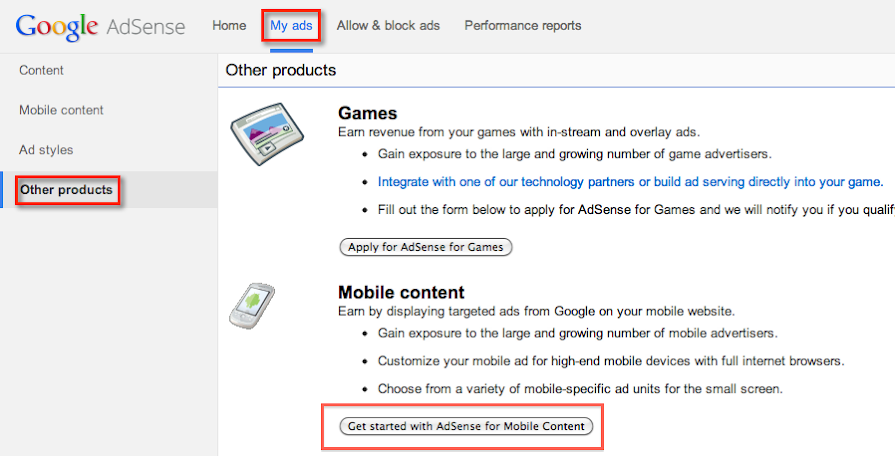
  2. Visit the My ads tab.
  3. From the sidebar, choose Other products.
  4. Click Get started with AdSense for mobile content in the window that appears.

    Get AFM code
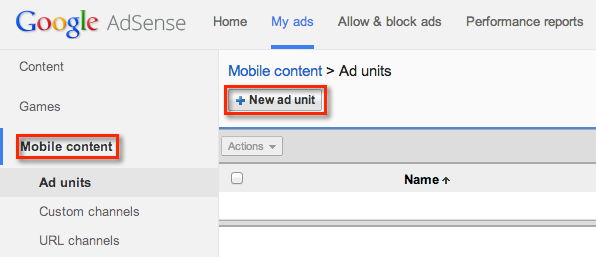
  5. Then, click Mobile content tab which will appear in the sidebar on the left.
  6. Click +New ad unit.

    Create AFM ad unit
  7. Name and customize your ad unit, then click Save and get code.
  8. Copy and paste the code into the source of your mobile webpage in the location where you'd like ads to appear.
Once you've added the code to your page and saved your changes, relevant ads should appear within 48 hours.

Google AdSense Alternatives

If you were disabled from the program, here are some alternate programs you can try...
Media.net
Chitika
Kontera
Infolinks
Clicksor
Don't ever depend on AdSense as your main income source. Diversify and learn to make money in other ways.

Got Questions?

I'd love to chat with you in my forum where we have tons of discussions about AdSense going on. Register and start chatting with us today!

Make More With AdSense By Creating Niche Websites

One of the keys to succeeding with AdSense is to build a niche website that targets a narrowly defined topic. This is the way I've been profiting with AdSense since 2003.
I can show you how to setup a niche website and I dedicate an entire chapter to AdSense and earning strategies in my book, Niche Website Success.

Protecting Your AdSense Account

It’s a fear many Webmasters have — getting pulled from AdSense for fraudulent clicks or other activity deemed “against AdSense TOCs”.
The fear is pretty valid. I’ve heard of people getting pulled from the program for “no apparent reason” (according to them).
Of course there are two sides to every story, but it reinforces that Google’s #1 interest is protecting their advertisers, not you, the publisher.
And rightfully so.
Google watches AdSense accounts like a hawk, especially if you’re a new member.
They track IP addresses and monitor for fraudulent clicks on a regular basis. A friend of mine clicked her own ads and was removed from the program within 2 days of joining.
While I have no fool-proof way to ensure your account won’t get dinged, here are some tips to keep you in good graces with Google.

1. Report Accidental Clicks

If you accidentally click on your own ads (and people have done this), the best thing to do is report it to Google immediately. In fact, Google even advises you to do this.
If you’re honest and upfront about it, Google probably won’t remove you from the program. Your account may get flagged temporarily and/or you may lose some revenue, but it’s better you report it than having them find out about it.
Just make sure this doesn’t become a habit.

2. Stop Telling Your Friends & Family to Click on Your Ads

Some people join Adsense with the intent of getting rich by having their friends and family click on their ads. While you may think this is pretty fool-proof idea, it’s not very smart or ethical.
First of all, advertisers pay for those ads through the AdWords program. So when you tell people to randomly click the ads, you are throwing their hard-earned money down the toilet. In a way, it’s stealing.
Second, what if Google notices the multiple clicks from the same IP address. Yes, maybe it’s not your IP address, but is it really worth the risk? Plus, I would imagine Google would eventually ignore those clicks anyway.

3. When Google Calls…. Answer… And Keep Your Records

Some thieves are not too bright. Once I caught someone who literally ripped off my entire site. Not only did they forget to remove my AdSense code, but they violated the AdSense T&C’s by calling attention to the ads.
Google discovered this site, and because the person was using my AdSense code, they contacted me because they thought it was my site. I explained to them what happened.
After I replied, I didn’t hear back from Google and that made me a little nervous. So I contacted them again and included the previous correspondence.
This time I received an answer and Google told me they added a note to my file that said I was not the owner of the domain that violated the T&C’s. More importantly, I saved this reply for my own records just in case.

4. Obey The Rules

Even though Google doesn’t seem to be enforcing this much, they recently added a section to their T&C’s that require any site that uses AdSense to have a Privacy Policy. See the end of Section 1 of their terms and conditions.
Many Webmasters aren’t taking this too seriously, but if it’s in their T&C’s then why not take 10 minutes to set it up?
————-
A lot of people feel Google owes them something or they are doing Google a big favor by being an AdSense publisher.
I have no way of knowing how AdSense affects Google’s bottom line, but I can tell you this. Thousands of advertisers are paying to advertise with Google through AdWords, and we know that’s where Google is making its money.
AdWords advertisers funnel thousands of dollars into Google everyday and indirectly earning you money from AdSense. Google’s best interest is keeping them happy, not the publishers. Remember, AdSense publishers aren’t paying Google a cent.
So the next time you try to sneak a click or encourage your visitors to click an ad or two, ask yourself if the 12 cents you’ll gain is worth losing your account for good.

Beware of AdSense Overload!

As the AdSense popularity grows among Webmasters, it’s hard to find a site without at least one AdSense unit displayed.
And in my opinion, many Webmasters overdo it.

Because you want to get as many clicks as possible, it can be very tempting to lace your page header with multiple AdSense ads. After all, the more ads, the money you’ll make right?
Not necessarily…
… especially if your site is in a niche that targets Webmasters or other Internet savvy groups. These audiences are often immune to Internet ads in general and are twice as likely to ignore them.
So instead of AdSense becoming an additional revenue stream, it becomes a sign that may suggest you’re more interested in getting clicks than giving useful content.

Too Many Ads Looks Amateur-Ish

Arial of attackdepression.com told me she immediately thinks “amateur” when she comes across a site where the Google ads take up more real estate than the actual content.
And she really hates the sites where you have to scroll down just to see the first line of real content because the AdSense ads are in the way.
I have to agree. First impressions are everything. And if your visitors first impression of your site is “too many ads and not enough info”, you’ve immediately lost some interest, credibility and perhaps a repeat visitor.
Your visitors shouldn’t have to dig through your ads to find your content.

Maximize But Don’t Overdo It

Don’t get me wrong. I think you should maximize your AdSense revenue potential by using multiple AdSense units – that’s why Google allows up to three.
Just make sure they don’t overpower your site’s layout and you have good content to supplement the ads.
Remember, it’s your content relevance and site usability that keeps people interested and encourages them to return – not your advertisements.
So rather than being so eager to show off your AdSense ads with the contrasting bright yellow background, why not show them why your site is worthy of a bookmark and a return visit. There’s no better way to do that than through useful info and site usablity.

AdSense Awareness

These days Web surfers are much more ad conscious than they were years ago. And with the media stories that have flooded newspapers and news programs, it’s getting harder to find people who don’t know a little something about “making money with Google ads.”
In other words, people are much more aware, and it’s getting easier for the average surfer to spot a greedy Webmaster.
A few years ago, more people would click ads out of curiosity or confusion. These days the only click many surfers are making is the “Back” button because they know exactly what this Webmaster is up to.
It’s all about balance. There’s nothing wrong with using 3 AdSense units on a page. And there’s certainly nothing wrong with having them highly visible to increase the chances of a click thru.
But if your ads overpower your content, and it becomes obvious you’re only out to make a fast buck, is it really worth the loss of credibility and a potential repeat visitor?
AdSense should supplement your content, not BE your content.
It doesn’t matter how you slice it. Content has and will always rule. And I’d much rather sacrifice a few clicks with the hopes they will find my site useful and want to return again.
And should they happen to click an ad in the process of browsing my site, that’s an added bonus!
And who knows, maybe on their next visit they’ll make a purchase that is worth a whole lot more to me in commissions than 8 cents from an AdSense ad click.
AdSense is a wonderful, lucrative program. But don’t let the dollar signs overshadow what it really takes to make a site succeed for the long haul.

How I Increased My AdSense Earnings by $1000

What I did was so simple, I’m almost ashamed to dedicate a post to this. :)
I hope you forgive the simplicity of what I’m about to reveal, but sometimes the simplest changes make the greatest impact.
In early November I added a 728×90 unit to the header of my Site Build It! site, Flat Stomach Exercises.  That unit began earning around $40 per day for the first few days and then leveled off to $30-ish per day.
I’ve also had decent success with the same unit on my forum, WebsiteBabble.com.  The banner doesn’t convert nearly as well there, but it still does OK and is worth the placement.
Note: I attribute the lower performance to the fact that WebsiteBabble.com is targeted to Webmasters and Bloggers who often have ad blindness.  So it’s no surprise that unit doesn’t perform quite as well there.
I had been reading about how well the 728 unit performs on many sites and thought of adding a unit to 2 Create a Website, but was afraid it would distract from my overall sales goals.  However, I am less concerned about that on Flat Stomach Exercises (FSE).
FSE is primarily an Adsense site for me.  As many of you know, I created that site to do a test run with Site Build It! so I could use it as a case study/example on 2CreateAWebSite.com.
To be honest, I’m not as passionate about fitness to work on the site frequently (not to mention I don’t have the time), so I just let it sit and earn passive income.  I never dreamed that test/case study site would perform so well with limited content updates.
So I’m OK with being a little heavy on AdSense ads with that site.  Not sure I would use that same strategy on 2 Create a Website because I have other goals, and I have to be careful AdSense doesn’t become a major competitor for the main products I promote.

Understand When AdSense Makes Sense for You

It’s tempting to read this post, dart over to your AdSense account and create a 728 unit for your site.  That’s fine if the primary goal is to earn money with AdSense, but that may not be your best move.
AdSense may be the primary monetization option for some sites, yet more of a supplement for others.  You have to decide which one it is for you.  Adding more units to your pages may actually distract and compete with other products you are  promoting.
For example, say you are earning $500/month in commissions by referring a product on a specific page.  After adding the 728×90 unit, your AdSense earnings increase by $100/month, but commissions for the main product you promote drops to only $200 per month.
In this example, the AdSense banner probably hurt your net earnings.  I say “probably” because it may be hard to prove that was the exact cause, but if you see drastic results after making a change like that, AdSense may be the culprit.  That’s why you should test everything.
This is the very reason some people choose to only put AdSense ads on pages that have high bounce rates and pages that don’t promote their “important” products.
So you should always look at the big picture for your site.  If your AdSense earnings are increasing rapidly, are sales for something else declining?  These are statistics you should pay attention to, and it’s the reason some people don’t use AdSense on certain pages if at all.
Always know your individual site goals and make sure your monetization decisions support them.  Believe it or not, a boost in your AdSense earnings may not always be a good thing for your bottom line.

What’s Your Best-Performing AdSense Unit?

How well an AdSense unit performs on a site depends on several different factors…
1) The page the unit is on
2) Ad relevancy
3) Amount and quality of traffic to the site/page
4) Placement of unit
So I am by no means about to suggest that one size fits all in regards to the units. However, I would like to open up a discussion on what you’ve learned about placement.
I recently tweeted that I am having great success using the 300×250 Medium Rectangle unit alongside my YouTube videos. On certain pages, my click-thru rate has quadrupled.
I actually got this idea from Google. One of their optimization experts suggested this on my site over a year ago.  Not sure what took me so long, but I am now implementing this on more pages and the results have been fab.
Let’s talk about what you’ve learned about placement and/or color experimentation.  Done anything different to give your earnings a boost?  Please share!

Make Money With Google AdSense

Interested in making money with Google?
Here's your complete guide to getting started along with some info on how to maximize your earnings, why some accounts are disabled and even alternatives to AdSense.
If you want to jump to the various sections, use the table of contents on the right.
Below is an AdSense check I scanned from 2006. At the time, it was the largest check I had received in the three years I had been in the program.
I blurred out my address, account number and bank info for privacy reasons, of course.
google adsense earnings check
Note: Google now pays me by direct deposit, so I no longer have paper checks to show. That is why the screenshot is so old.
Here's a more recent screenshot. It's important to note that this is from 6 websites.


What is Google AdSense?

AdSense is a nice way to monetize your traffic, and very easy to implement. It's one of my top earners and has been since 2003. (See the video about my earnings further down.)
Google.com earns most of its revenue by allowing other website owners to advertise on their search results pages.
All this is managed through a program they call AdWords (pay per click marketing).
You see these ads displayed above the free/organic results and along the right side of the page on Google.com.
These are called Sponsored Results, and the advertisers are paying a certain amount of money per click for these ads.
It's an auction-based system that allows advertisers to compete for those spots. Whomever has the highest bid and most "quality" ad, gets the top spot and so forth.
Now you can earn a share of the revenue that Google earns from AdWords by displaying these same text or image ads on your site. When someone clicks, you earn roughly 68% of the click and Google gets the rest.
This program is called AdSense.
It's a great program that can help you drive additional income to your website -- especially if it's mostly content based.
So if you are one of those people that doesn't like the idea of paying for a site, this is an excellent way to earn your money back and then some.
Please make sure you read this entire article. AdSense is not a get-rich-quick scheme and it takes a lot of work to make money. Don't think that just because you join, you are guaranteed to make big money.

How Does AdSense Work?

Here's a video I did some years back. The reason I still show it here is the concept is still exactly the same.
The biggest difference is it takes more work to build up traffic. Nevertheless, AdSense still works just as well as it did back when I created this video.

How Much Can You Earn With AdSense?

The commission you receive per click depends on how much advertisers are paying Google for the particular ad. You will earn a share of that amount.  I've heard of earnings anywhere from 2 cents to $15 per click.
Getting over $1 is probably very rare, although it does happen from time to time. However, you will find that most of your earnings will be on the lower end of the spectrum.
It's important to note that I cannot estimate how much you will earn based on your traffic. People always want to know what the average amount is per click.
No one knows the answer to this except Google, so don't let anyone try to tell you any different. It would be impossible for myself or any AdSense publisher to give this information because the ads all cost different prices and we have no idea what advertisers are paying.
However, there are some niches that obviously pay more. So it is logical to believe that keyword phrases like sex, make money, etc. may earn you more per click since these are highly competitive keywords that are searched for quite a bit on
The more competitive the search term, the more the advertisers pay and the more you earn as a publisher.
Even though Google will not reveal how much you are earning for each ad that is clicked from your site, you can still login to your account at any time and see the total amount of revenue you've generated that day, week, month, year, etc.
For example, if you see that you've made $12.60 today from 9 clicks then you can calculate that your average click-thru commission was $1.40 per click.  That's as detailed as their stats will get.  Also remember, that's only an average.  You won't know how much each specific ad brought in.
The amount you'll earn also depends largely on the amount of targeted traffic you receive to your own site, how well the ads match your audience's interests, the placement of the ads on your pages, and of course the amount you receive per click.
Ideally, you should create a site on a topic you know a lot about.  That way you'll have a much easier time creating a generous amount of content on that subject.

My Google AdSense Earnings

I have been receiving monthly checks from Google since 2003 (yes that's me holding the same check from above), and I've read numerous success stories of websites earning 5 digit incomes per month with AdSense. 

Now, I will admit, a 5-digit commission in a single month is probably not the norm for most participants. 
I promote AdSense on 6 of my websites (2 blogs, a forum and 4 static sites). My earnings vary greatly between $5K and $8K per month. A lot depends on traffic and how much the advertisers are spending on ads.

My sites have been around for a long time and I have a great deal of traffic so that's a big reason why I earn so much. I promote my sites on social media, create YouTube videos etc. Making a lot of money with AdSense is all about numbers. The more traffic you have, the greater the earning potential.
My checks weren't always this large.  I think my first month's earnings in 2003 totaled less than $20. However, as my traffic increased, so did my checks.
I cannot emphasize this enough. AdSense is NOT an overnight get-rich-quick opportunity. Even though this may look easy, please don't underestimate the amount of work I've put into my sites over the years.

Creating Your Website for AdSense

Before you even begin your site, make sure you've come up with a topic that you feel you know plenty about.  That way it will be easiest to write a lot of content. 
The more content you have, the better chance you have getting accepted into the program.  Also, the more content and traffic, the greater the earning potential. 
If you want to make a lot of money, prepare to write a lot of content and learn how to market your site. Don't expect to throw up a 10 page site and make $1,000 per month. That's unrealistic.
Now let's talk about building your website.  There are two ways you can approach this:
1) Do it Yourself (DIY) from scratch
2) Use Site Build It! (SBI!)

The Do It Yourself Method

I've actually used both methods for building my site and there are advantages and disadvantages to both. So the option you choose, depends on what you're comfortable with.
If you use the DIY method, you will have to go and get a domain (yoursite.com) and then sign up for a web host and build your pages.
Decide if you want a static website like this or a blog. If you don't know the difference, this article will help you out.
Averaging between $3 and $10 per month, the DIY method is usually the most cost friendly of the two but you are mostly on your own in terms of learning how to create your web pages and adding the AdSense code to your site. 
Web hosts are generally there to house your site.  They don't specialize in helping you market and optimize your site for the search engines to help you get traffic.  So don't expect a lot from them in terms of helping you market your site and making money with Google AdSense.
This is not necessarily a bad thing.  I had to learn how to build this site on my own and it wasn't very difficult. 
I now manage all of my static sites with Dreamweaver. My blogs use WordPress.

Consider Using Site Build It! (SBI!)

I don't make a ton of money because it's not my primary site, but the site definitely pays for itself and then some! I actually just created this website to test the website building system out.
The reason SBI! is different from the other do-it-yourself hosts is that first it provides all the web page building and marketing help all in one place.  Your domain registration, web hosting, website builder, and marketing help come with the price.
They provide you with a brainstorming tool so you can research and select a "profitable" niche based on monthly keyword searches/demand. Then they guide you to building your website using their Video Action Guide.
Now, it's important to note that SBI! does not build your site for you. That's up to you. They simply provide the guidance so you can optimize your site for AdSense or other programs.

How to Join AdSense

Once you have 20-30 pages on your site, go to http://adsense.google.com to apply.
When you are accepted, simply copy and paste the provided HTML code into any page that you'd like to show the ads. You can opt to display text ads, image ads, or a combination of both. It's up to you.
You can either display the ads vertically along side the page like Google does or in a banner-like formation horizontally across your pages.  You can even customize the colors to match your site's theme.

Tips on Succeeding With AdSense

Here are some tips for achieving success with Google AdSense.
Build Traffic
You're not going to make anything with AdSense if you don't have enough traffic. Please don't think this is some easy, get-rich-quick program. This takes work and it all starts with getting visitors.

Social Media Marketing Strategies

Social media is playing more and more of a role when it comes to building traffic online because so many people are using it. You may be defiant against using FaceBook, Twitter, etc. because you feel these sites are narcisitic and a waste of time.
But let me tell you, that's probably where a lot of your potential website visitors are hanging out -- so why not take the opportunity to reach them?
When I first heard about Twitter in 2008, I wasn't impressed. I didn't think it would last long and I found it odd people were microblogging about every little detail of their days.
Then in 2009, celebrities really helped put Twitter on the map. (Remember Ashton Kutcher's 1 million follower goal?) Since then, Twitter has really blown up.
So it was only a matter of time before Internet marketers started using social media to market their businesses.
The other component of social media is branding yourself as an individual. Social media will help you do that.
The days of anonymous blogging and webmastering are over. People with successful sites and blogs are not only great writers, communicators etc., but they are well-liked and have developed a brand as an individual.

Twitter

Twitter is a microblogging site that allows you to send a 140-character or less message out to anyone who is following you. I use Twitter to announce my weekly blog posts and chit chat with people who have questions about Internet marketing.
The key to Twitter is NOT to just self promote your site all day. You should take time to follow and respond to people who have sites related to yours (Use the Search function.)
I also use Twitter to send out helpful articles, videos, etc. that may interest my followers. That's a great way to build credibility and interest in your Twitter feed.

Facebook

You can create a Facebook page to accomplish the same tasks above, however you have a lot more room to write since Facebook has a higher character limit. And since FB has a threaded-comment design, it's a great way to start conversations with your followers.
I often post thought-provoking questions in order to spark juicy discussions. People love giving their opinions and feedback. Facebook is a great way to poll your audience and get their feedback on various topics.
Of course I also use Facebook to promote my websites, YouTube channel, etc. but I also use it as a discussion platform.
Here's a video that shows you how to engage your Facebook fans. These tips actually work for most social media sites.

Google Plus

This is Google's answer to Facebook. It's very similar, but you can create circles to organize your connections.
I like Google Plus. The crowd there seems to be a lot more technically savvy compared to the other networks, but I do feel the layout is much cleaner. I've also made some great connections there.
Google Plus is new compared to Twitter and Facebook, but in 2012 many marketers gravitated to Google Plus because of the emergence of Google Authorship.
This allows you tag and associate any content you own with your name.
So when you write an article on someone else's blog, you would link your name back to your G+ profile. And of course, your G+ profile would also have your website listed in your profile.

Getting Followers

If your website is new and has little traffic, getting followers/friends/subscribers/likes may be a challenge at first. I would highly recommend following people who have sites related to yours. Reply to their tweets, posts, etc. and engage in conversations.
For example, say you have a site on cars. You can join popular FB pages related to your niche. Join in the discussion with other "fans"/members. You can also change your FB profile to display your own Facebook page name instead of your real name.
That way when people click on your "name" they will go to your FB page. You can update this in your Facebook Profile Settings.
Just remember. You have to give to get. Social networking is not just about you blasting ads and links to your own site. The words "social" and "networking" both imply multiple parties are involved, and that is true.
Take the time to comment on other people's work or posts. Write a response blog post to a controversial article someone wrote and tweet it to them.
If the person also has a FB page you can "Like" the page then cross link your pages together by typing @TheNameOfTheirPage when you post it to your FB page.
So let's say you write a blog post responding to an article another car blogger wrote about. You can post the following on your Facebook page...
Here's my witty response to @NameOfFaceBookPage 's article about Car Emissions.
Now the link will also be posted on their page.
Note: Be responsible about the above strategy. If the article is worthless and clearly just an attempt to get a link back to your page, the person may remove it.

Balancing Social and Business

There's a science to promoting your site via social media marketing. You want to find the right mix of being social and promoting your business.
Obviously you don't want to go overboard on the personal posts (what you ate for breakfast, etc.), but throwing in something casual is fine every now and then. It helps people connect with you and it shows you are human.
In addition, you should also recommend other resources and sites not affiliated with your website. If it's always about you then you may appear greedy and selfish. Take the time to show love for another site that your followers may find interesting.
How you use social media will really reveal a lot about you over time. People who have the most success with this type of marketing have found the right balance between business and personal.
Social media can be a great place to promote your business, but more importantly, it can enhance/promote you as an individual. Letting people get to know you as the human behind your business can really benefit you in the long run.

How to Register a Domain Name

Hey there future site owner,
I'm going to clue you in on some tips most people don't absorb prior to registering a domain name.
There have been a lot of changes on the web in recent years so make sure you read this entire page so you pick the ideal name for your website.
NOTE: If you already know about domain names and don't need any extra advice, go here to register.
A domain name is the home of your website and often ends in extensions like .com, .net, .org, .info, .us, .biz, .tv and more. Today there are numerous extensions available, but .com is still the most popular by far.
Once you have registered your name, you will select a web host (2nd step).  The web host is the guts of any website because this is where you create and publish your pages, create a blog, create email addresses, add functionality and maintain your site.

Steps to Registering a Domain

Reserving a domain name is easy, inexpensive and only takes a few moments. The big name companies like Register.com and NetworkSolutions.com charge ridiculous prices such as $30-35/year for one domain name, and you get the same service at WebsitePalace.com.
It doesn't matter where you register your domain.  Almost every registrar provides the same services.
You can save a bundle at WebsitePalace.com, and you'll have access to free domain forwarding. (Forward any domain to any site for FREE!)

Keyword Rich Domains

For search engine optimization (SEO) purposes, many experts recommend registering a domain with keywords you want to be found for. While this was a must years ago, it's not quite the necessity it once was.
In fact, there was a very big Google update in October 2012 called EMD (Exact Match Domain update) that targeted domain names that were only ranking because the name matched the targeted phrase.
That's not to say you shouldn't register a name that has the keywords you want to target, but don't expect to rank well just because you choose a keyword-rich name. Getting ranked well in Google is a very complex task. The domain is not as big of a factor as it used to be.

Going For The Brand Name

Some people prefer to go for a shorter, brandable domain that's easier to remember -- especially because so many "good" domains are taken these days.
So instead of registering a keyword-rich name like HealthAndWellness101.com, you would register a made-up name like Fitzee.com. Fitzee means absolutely nothing, but it's short, catchy and easy to remember.
Plus, it would look a lot better on a shirt, mug or hat than a 4-letter domain. :-)
I still think it's a good idea to aim for the keywords you want to target. Descriptive names can have advantages. For example, it automatically tells the potential visitor what the site is about.
Having said that, don't make your domain name so long and awkard that it's hard to read and remember. It's really about finding a balance. Also, don't be shy about bouncing ideas off your friends and family before registering.
Here's another tip. Write the name down to give you an idea of what it may look like on business cards, T-shirts and other printed materials.
Remember, your domain is a big part of your brand, so take your time coming up with the right name for your site.

Total Pageviews